Dangerous overuse of children’s asthma inhalers targeted in UK-first study
Researchers at University Hospital Southampton (UHS) are leading a large study to reduce children’s overuse of reliever inhalers linked to severe asthma attacks.
Children with asthma who use a high number of blue reliever inhalers are several times more likely to have severe asthma attacks, which can be life-threatening.
The Prescription Alerts for Reliever Inhalers in Children (PARC) study is offering these children an enhanced check-up, led by a specialist nurse.
The research is assessing if this extra check-up reduces the number of asthma or wheeze attacks these children have. It is the first time this issue has been formally studied.
Families are being invited to take part at general practices in Hampshire, Dorset and the Thames Valley region, as well as UHS’s National Institute for Health and Care Research (NIHR) Clinical Research Facility.
The study is being delivered through the NIHR Southampton Biomedical Research Centre.
Asthma is very common in children and young people. It is a long-term lung condition that causes wheezing and breathlessness. Severe asthma attacks may need hospital treatment.
Two types of inhaler are typically used to treat asthma – preventer inhalers and reliever inhalers (usually blue). Preventer inhalers are taken regularly to stop symptoms developing. Reliever inhalers are taken to relieve symptoms when they occur, such as during an asthma attack.
Reliever inhalers do not treat the underlying airway inflammation that causes asthma symptoms. Children who are using high numbers of blue reliever inhalers are more likely to have severe asthma or wheeze attacks. Those prescribed six or more reliever inhalers in the past year are 3-5 times more likely to have an asthma attack than those prescribed none.
All children and young people with asthma are currently invited for an annual asthma review by their GP practice. Experts recommend children using high numbers of blue reliever inhalers should have an extra check-up. However, this does not yet routinely happen in the UK.
The PARC study is led by Dr Anna Selby, a Paediatric Registrar at UHS and NIHR Academic Clinical Lecturer at the University of Southampton.
She said: “This study is the first of its kind to test whether a simple, proactive check-up can prevent severe asthma attacks in children and young people. Our hope is that by identifying children at higher risk sooner, and giving families extra support and education, we can reduce emergency admissions and transform how asthma care is delivered across the UK.”

In the PARC study, participating GP practices are divided into two groups. Practices in one group offer the enhanced check-up, while those in the other (control) group provide usual care. Children who have been prescribed six or more reliever inhalers will be invited to take part by their GP practice.
The researchers will then compare the number of asthma attacks that children at GP practices in the two groups experience over the next year. This will show whether the check-ups help to prevent asthma attacks in these children.
At the end of the project, children from control practices will be offered the enhanced asthma check-up. This means all children who take part will receive it at some point during the study.
Ultimately, the researchers aim to create a new alert system. This would notify GPs if over six reliever inhalers had been prescribed to a child. They could then invite them for a check-up.
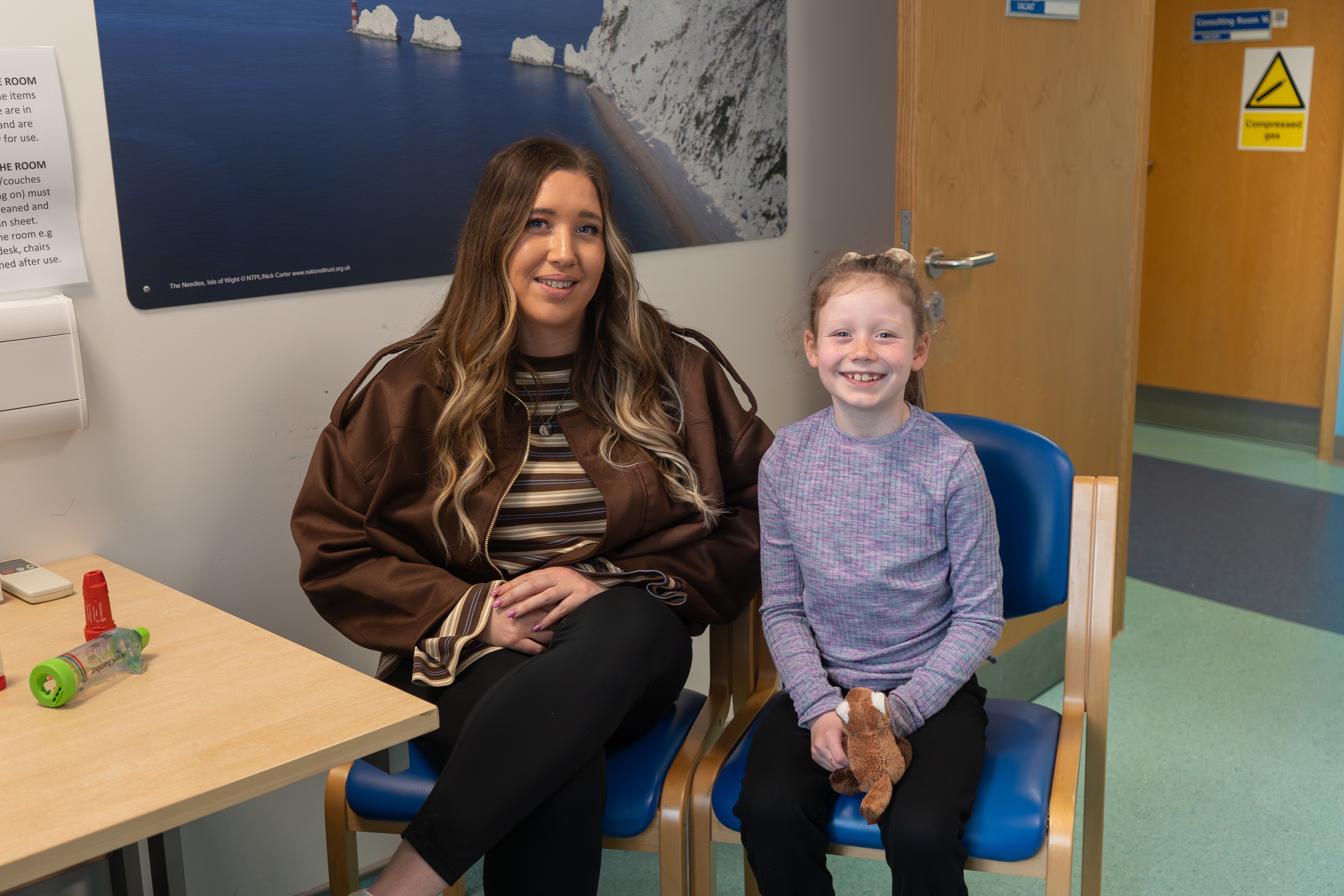
Atlanta McDermott and her daughter Amelia Bridges from Southampton are taking part in the PARC study at UHS. She says the support and advice they’ve received has made a big difference.
“Before we joined the study in December, Amelia was using her blue inhaler every day,” she said. “She was really wheezy, she found it difficult to sleep, and she was continually coughing.
Amelia now takes a combination inhaler, which contains both a reliever medication and an inhaled steroid (preventer) medication. This provides both relief from and long-term control of symptoms. Children may be prescribed a combination inhaler if their asthma is not well controlled with a steroid inhaler.
“The team explained the study really well to Amelia, and we’ve both gained valuable insights that mean we now understand asthma a lot better,” said Atlanta. “They’ve kept in contact throughout, with regular calls to check how she’s doing on the new inhaler.
“Now, thanks to the advice and support we’ve received by taking part, Amelia doesn’t use her blue inhaler anymore. Instead, she takes her powdered combination inhaler three times a day, and that keeps her symptoms under control.”
The PARC study is funded by the NIHR.
If you would like to find out more about the PARC trial, please visit https://www.parc.soton.ac.uk/.