Hospital Trust among first in UK to trial novel procedure to treat heart rhythm conditions
University Hospital Southampton (UHS) is among the first NHS Trusts in the UK to trial a ground breaking procedure to treat abnormal heart rhythm conditions without the need for a general anaesthetic.
The new all-in-one system, known as Volt, uses pulsed field ablation (PFA), a cutting edge technique that destroys targeted malfunctioning heart cells using ultrafast electrical pulses.
For the first time, patients can undergo this treatment while conscious or under simple sedation rather than requiring a general anaesthetic, a development clinicians hope will improve patient outcomes, speed up recovery and enhance theatre efficiency.
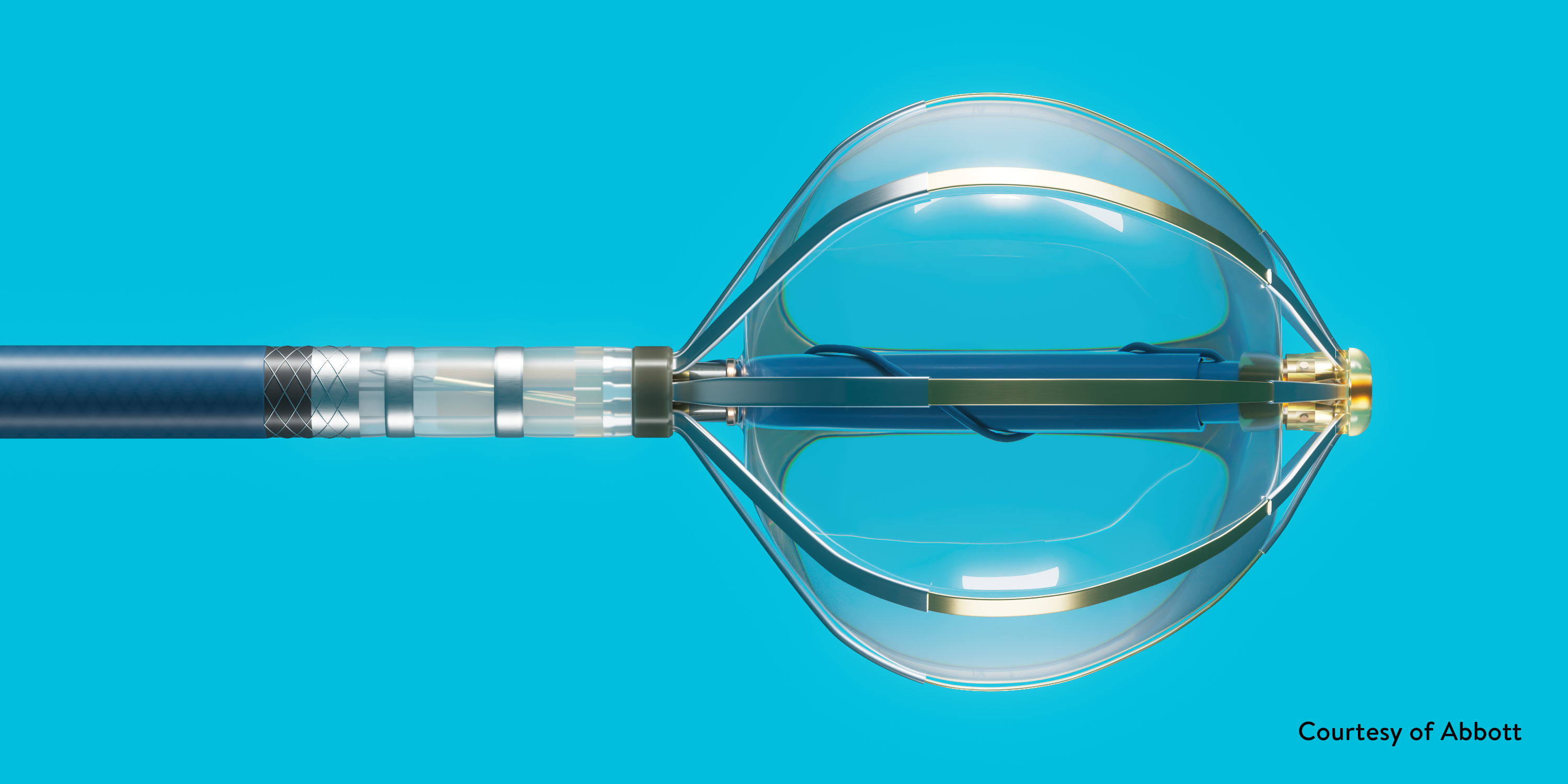
It is made possible by Volt’s innovative ballooninbasket catheter, which significantly reduces neuromuscular stimulation and associated pain compared with earlier PFA systems.
Combined with the precision of PFA technology, the system enables procedures to be safely and accurately performed under conscious or deep sedation.
One such condition is atrial fibrillation (AFib) – an irregular and often abnormally fast heart rhythm that affects an estimated 1.5 million people in the UK.
The condition occurs when the heart’s upper chambers beat chaotically and out of sync with the lower chambers, increasing the risk of blood clots, stroke and heart failure.
When medication or other treatments fail, many patients rely on minimally invasive cardiac ablation to prevent irregular heart rhythms – a procedure traditionally performed under general anaesthetic.
Heather Phillips, 55 from Romsey, is among the first patients at UHS to undergo the new procedure after being diagnosed with AFib last year.
Following the diagnosis, she was prescribed medication to control the symptoms but had a difficult few months, including trips to the emergency department due to fainting episodes.
Symptoms continued to affect her daily life and she eventually made the decision to retire early from her role at a primary school.
“Then I had a call with Prof. Ullah at UHS which turned everything around for me. He spoke to me about options and I finally had some hope that this condition wouldn’t take over my life completely! I have to admit I shed tears of relief at that time,” explained Ms Phillips.
Professor Waqas Ullah, cardiology consultant at UHS, led the team in Southampton, making them among the first in the UK to use this new technology. He spoke to Ms Phillips about the new PFA procedure and she opted for the surgery with sedation.
Ms Phillips added: “I was nervous, I think anyone would be, but the surgical team were highly professional and gave me a good deal of confidence about putting my life in their hands. Opting for sedation over general anaesthetic made me feel more in control and I knew the recovery would be quicker, meaning I could go home sooner and that made everything seem less frightening.
“When I was back on the ward there was no pain, no sickness, only a little stiffness in my leg. I am most grateful to Prof Ullah and his team. It’s still early days but my heart feels great, quiet, as good as new. If in the future I need more surgery, I won’t hesitate in putting my confidence in the same people.”
Using the new system, clinicians are now able to map, pace and ablate using a single catheter, streamlining workflow and reducing the need for multiple device exchanges.
The ballooninbasket design also allows for efficient energy delivery directly to targeted tissue, helping eliminate the heart’s erratic electrical signals.
Prof. Ullah said: “We are proud to be among the first NHS sites in the UK to adopt this new technology, marking a significant step forward in cardiac procedure innovation.
“Crucially, we can now carry out this procedure without the need for a general anaesthetic – something other comparable systems have not yet achieved.
“This advancement helps minimise the risk of complications and ensures a smoother experience for patients throughout the procedure and recovery.”
He added: “We have performed the new procedure on eight patients so far, delivering exceptional efficiency; the AF ablation itself takes just 30 minutes, highlighting both the speed and effectiveness of this approach.
“Looking ahead, the ability to deliver these procedures consistently, safely and without the risks and costs associated with full general anaesthesia – while maintaining such rapid turnaround times – has the potential to bring significant benefits not only to our patients, but to the wider NHS.”
The Volt system, developed by medical device company Abbott, is designed to overcome the limitations of traditional thermal ablation, helping to minimise the risk of damage to surrounding structures such as the oesophagus and blood vessels.
By enabling mapping, pacing and ablation with a single device, it represents a major step forward in both patient safety and procedural efficiency.