Hospital Trust cuts carbon emissions through major theatre upgrade
University Hospital Southampton (UHS) has cut waste from anaesthetic gases by 87 per cent through a major upgrade to the pipework entering its operating theatres.
To coincide with Earth Day (22 April), the Trust has announced it has reduced the amount of nitrous oxide (N₂O) being released into the atmosphere by around 600,000 litres a year – preventing 354 tonnes of carbon dioxide being emitted (CO₂e) annually.
The saving is comparable to around 175 return flights between London and New York, the annual energy use of around 40 UK homes, or driving around the Earth more than 30 times in a typical petrol car.
Nitrous oxide, commonly known as “laughing gas”, is used as part of anaesthetic care during some surgical procedures as well as for pain relief.
But anaesthetic gases account for around five per cent of global healthcare emissions, with nitrous oxide a significant contributor due to its high heat trapping effect and its long lifetime in the atmosphere. It is also a major greenhouse gas and the primary contributor to ozone layer destruction.
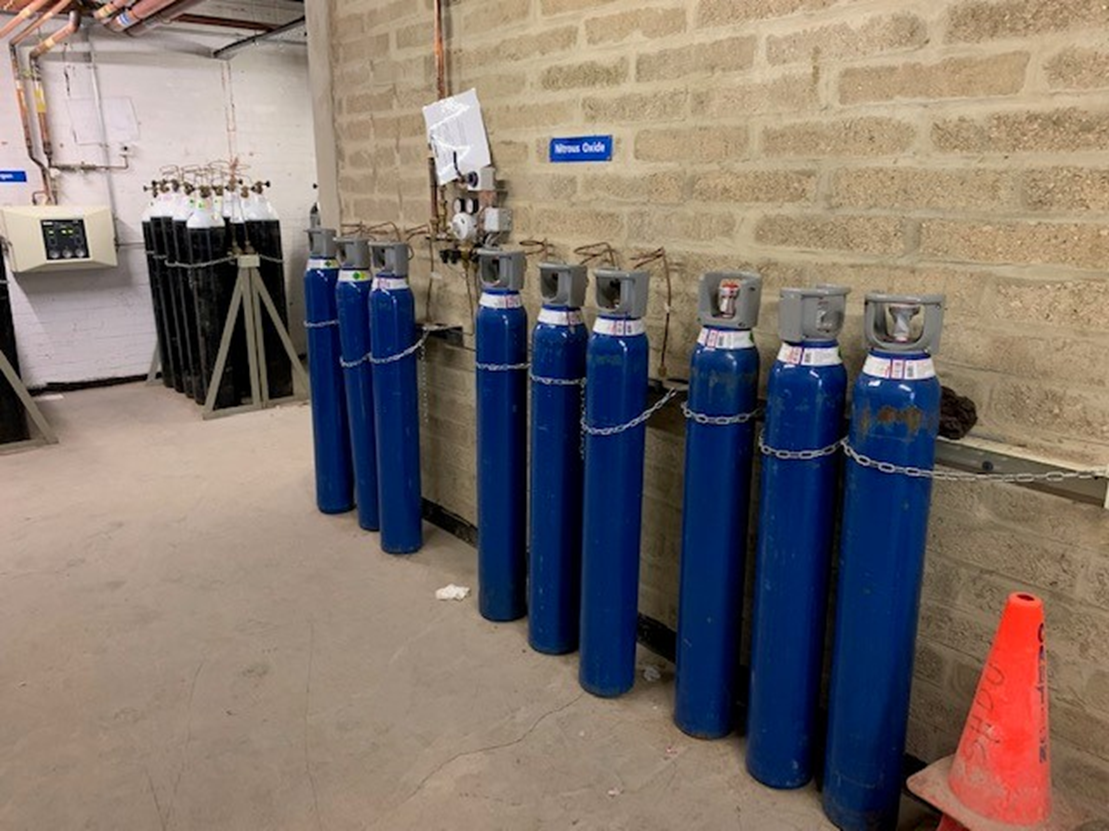
Traditionally, the gas has been supplied to theatres through central pipework connected to large storage systems, known as manifolds.
Evidence shows these systems are prone to leakage, meaning substantial volumes of gas can be released into the atmosphere even when theatres are not in use.
At UHS, six manifolds routinely supplied nitrous oxide to paediatric, obstetric and neurological theatres, with occasional use in adult general and trauma anaesthesia.
The Trust has now decommissioned its piped nitrous oxide manifolds and is instead using small portable cylinders attached directly to anaesthetic machines in theatres where the gas is required regularly.
Additional portable cylinders are used to allow theatres to work flexibly and ensure nitrous oxide remains available when clinically needed.
This has eliminated leakage and significantly reduced waste while ensuring patients continue to receive safe anaesthetic care through the alternative supply arrangements.
The work supports the Trust’s updated Green Plan and the NHS ambition to achieve net zero emissions by 2040.
Andy Fox, deputy chief pharmacist at UHS and project lead, said: “By switching off an outdated system that was leaking gas around the clock, we’ve delivered a major carbon saving without compromising patient care.
“Cutting nitrous oxide leakage by 87 per cent is a significant step forward for sustainability at UHS and shows how modernising hospital infrastructure can make a real difference.
“The change has also delivered cost savings for the Trust and improved staff safety by reducing occupational exposure to nitrous oxide.”
He added: “This was a complex piece of work and very much a team effort. It would not have been possible without the commitment and collaboration of colleagues from pharmacy, anaesthetics, clinical engineering, portering, estates and finance.”

Funding for the project was secured from NHS England in 2025, following a detailed audit of the Trust’s gas infrastructure and a successful application.
The Trust will continue to review its estates and clinical systems to reduce environmental impact, including further work at Lymington Hospital, reviewing Entonox systems, and sharing learning through national NHS sustainability networks.